Tallulah Gorge State Park: The Ultimate North Georgia Hiking Guide (2026)
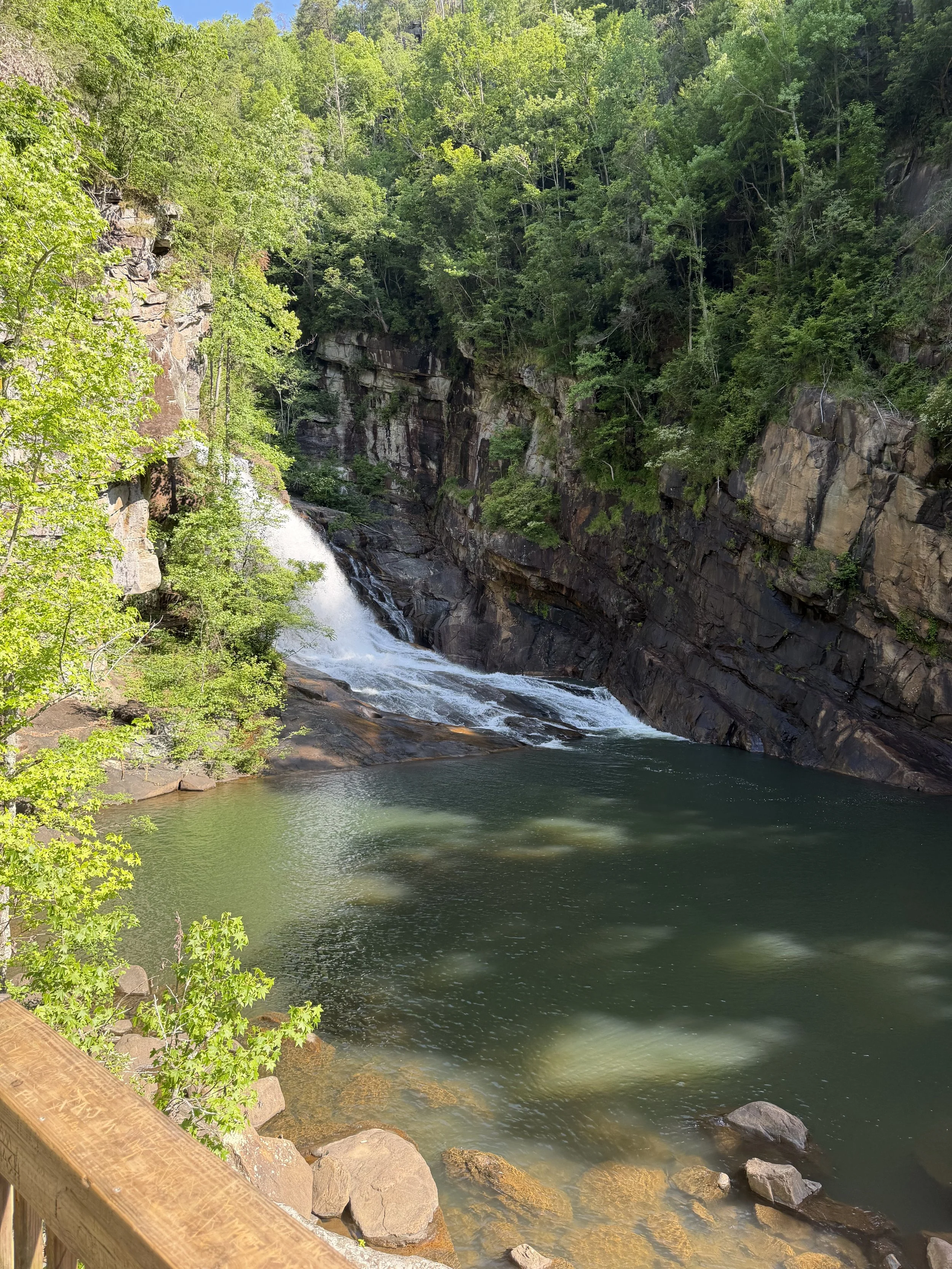
Hurricane Falls at Tallulah Gorge State Park
If you only do one big hike in North Georgia this year, make it Tallulah Gorge. I have explored a lot of trails across this state, and almost nothing hits you the way standing on the rim here does. You walk up to an overlook, look straight down, and your stomach drops. The gorge plunges nearly 1,000 feet to a river full of waterfalls, and you feel every foot of it.
Here is the thing though. Tallulah Gorge is not a "park, walk five minutes, grab a photo" kind of place. The best parts take some planning. So this is the full breakdown: the permits, the stairs, the suspension bridge, the fees, and how to actually have a great day instead of showing up at noon and getting turned away at the staircase.
Let me walk you through it.
The quick basics
Here is the cheat sheet before we get into the good stuff:
Where: Tallulah Falls, GA, off Highway 441, about 1.5 hours northeast of Atlanta
Park hours: 8 a.m. to sundown, year round
Parking fee: $10 per vehicle (this is the Georgia ParkPass). Annual passes are available if you hike a lot.
Gorge floor permits: Free, but limited to 100 per day, first come first served. More on this below because it matters.
Start here: The Jane Hurt Yarn Interpretive Center. Maps, restrooms, gift shop, and the permit desk are all here.
Size: About 2,689 acres with roughly 20 miles of trails
One current heads-up for 2026: the Terrora Day Use beach area is closed for construction through August 2026, so kayaking and swimming at the lake are out for now. The gorge hiking is all still open. As always, weather and dam water releases can shut down gorge floor access on short notice, so call the park before you drive up.
What makes Tallulah Gorge so special
Tallulah Gorge is one of the most dramatic canyons in the entire eastern United States. The Tallulah River carved it out of ancient quartzite and gneiss, and the result is a chasm two miles long and close to 1,000 feet deep with near vertical walls. There are six waterfalls tumbling through it, and Hurricane Falls, the tallest, drops nearly 100 feet.
The famous feature is the suspension bridge. It sways 80 feet above the river, deep down in the gorge, and crossing it is honestly a little thrilling the first time. Fun bit of history: tightrope walkers have crossed this gorge twice, including Karl Wallenda in the 1970s. You can still see the towers he used. So if the swaying bridge gets your heart going, just remember somebody walked across on a wire.
The hikes you actually want to do
There is a trail here for every energy level, from a flat stroll along the rim to a knee destroying descent to the canyon floor. Here are the ones worth your time.
Hurricane Falls Trail (the big one)
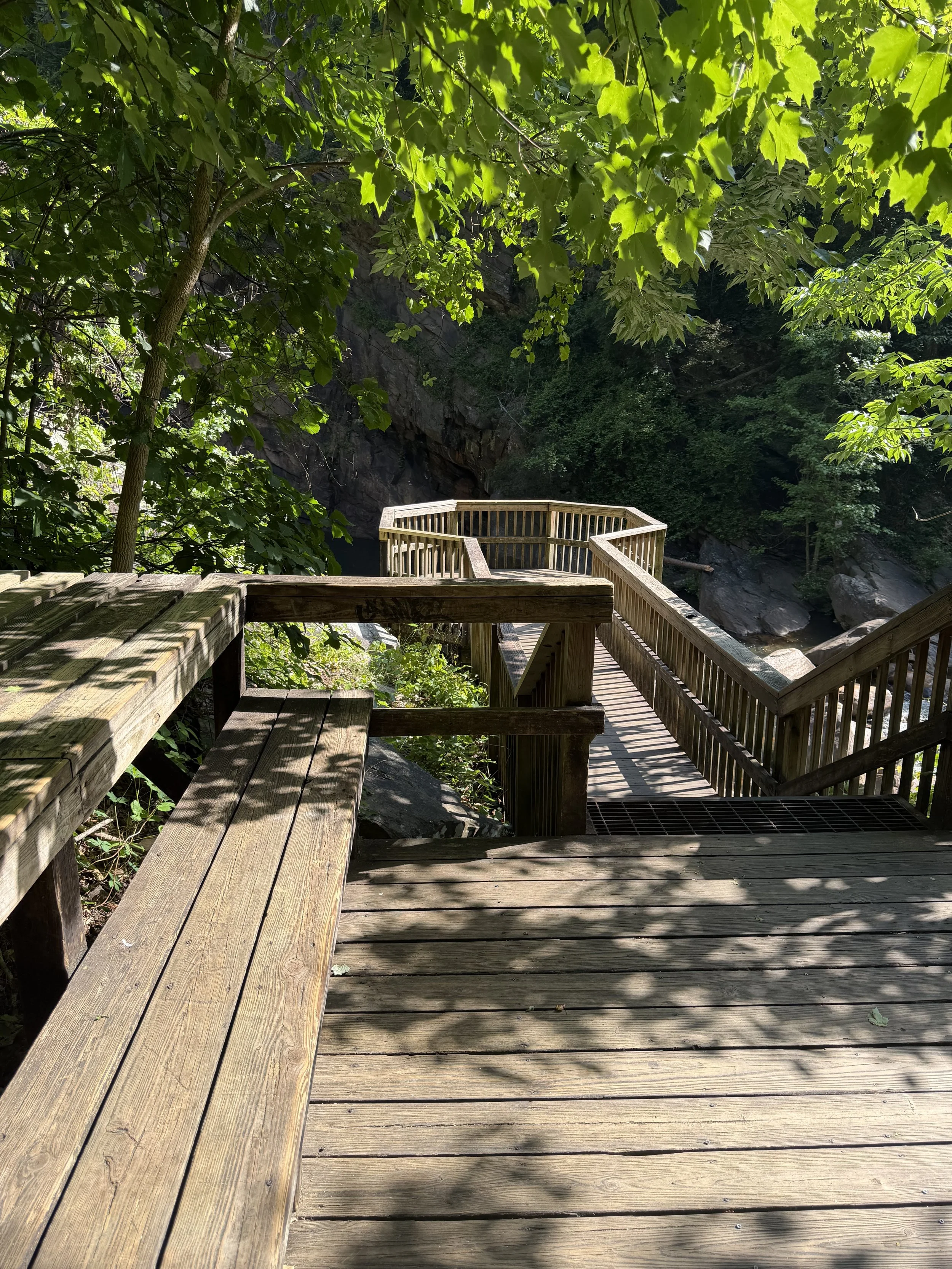
This is the hike everyone comes for, and for good reason. You start on the rim, then descend a long series of metal staircases down toward the suspension bridge. It is roughly 310 stairs down to the bridge, you cross over the rushing river, and then there are more stairs down to an observation deck at the base of Hurricane Falls.
Add it all up and the full out and back is over 1,000 stairs. I am not going to sugarcoat it: the climb back up is a workout. Your legs will let you know about it the next day. But standing on that bridge with the water roaring underneath you is one of the best payoffs in Georgia hiking, and you do not need a permit for this trail. Just bring water and pace yourself on the way up.
Heads up: pets are not allowed on the Hurricane Falls staircase or the gorge floor. Leashed pets are welcome on the rim trails though.
North Rim and South Rim Trails (the views without the suffering)
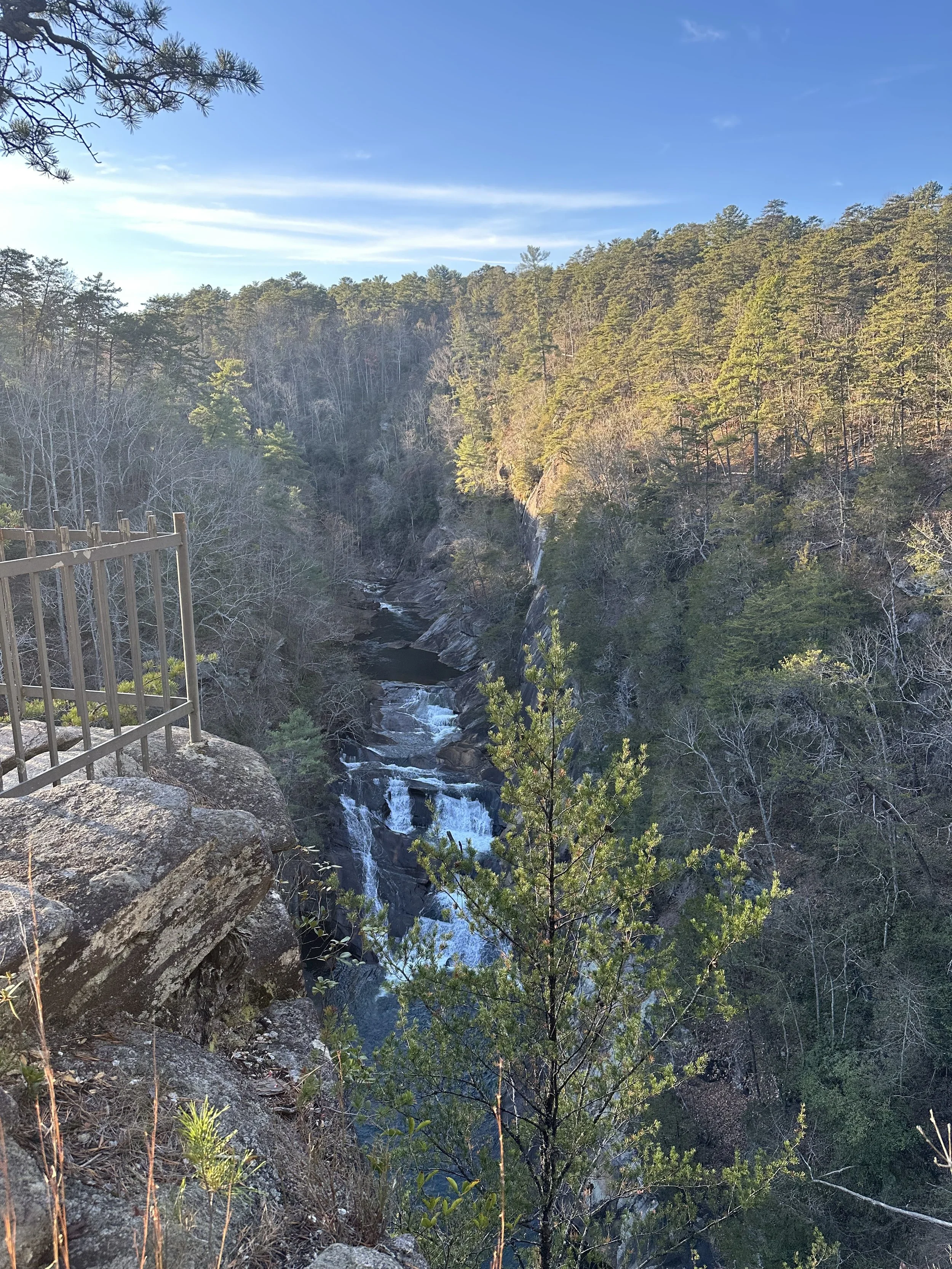
If 1,000 stairs is not your idea of fun, the rim trails are where it is at. The North Rim and South Rim trails connect a series of overlooks that peer straight down into the gorge, with views of the waterfalls from up high. Overlooks 2 and 3 in particular give you those classic, dizzying, picture perfect shots into the canyon.
This is the move if you are bringing kids, hiking with someone who has knee or breathing issues, or you just want the scenery without the leg day. You still get the wow factor.
Sliding Rock Trail and the gorge floor (permit required)
This is the adventurous one. To actually get down onto the gorge floor and reach spots like Bridal Veil Falls and the swimming hole, you need a gorge floor permit. The trail involves scrambling over boulders, and the park requires a permit specifically because of how rugged it is.
This is the most remote and scenic part of the whole park, but treat it with respect. Wet rocks here are seriously slippery, and the river can rise fast on water release days.
How the gorge floor permit actually works
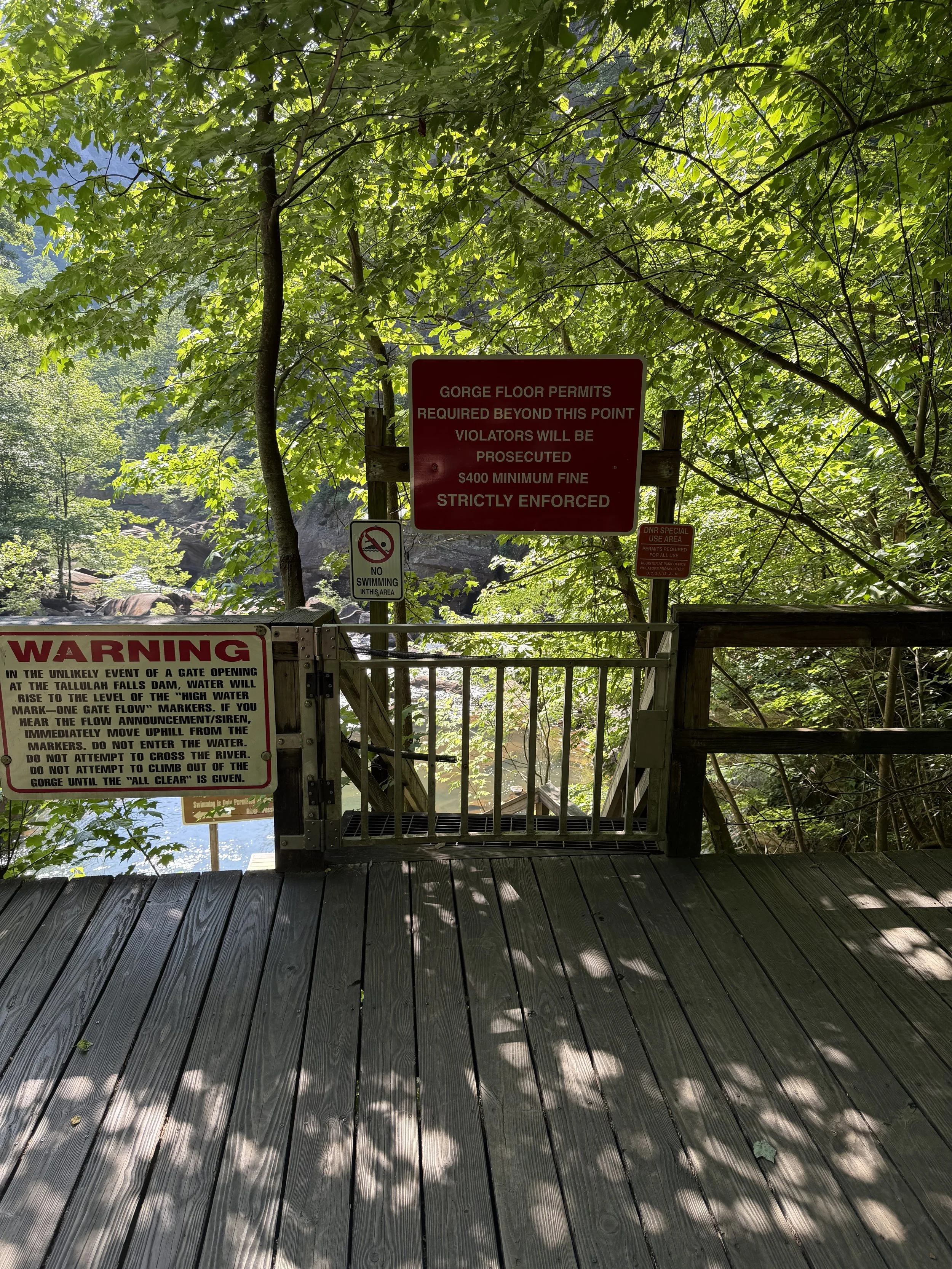
This trips a lot of people up, so let me be clear about it.
Permits are free and you get them in person at the Interpretive Center the day of your visit. You cannot reserve them ahead of time.
Only 100 permits are issued per day, and they start handing them out at 8 a.m.
On busy weekends and during fall color, they can run out early in the morning. If you want one, get there early. Like, before the doors open early.
You need proper footwear to get a permit. No flip flops, no crocs. They will turn you away.
Permits are not issued after 4 p.m. (3 p.m. during daylight saving time).
No permits at all on scheduled dam water release days, when Georgia Power releases water from the dam and the river turns into serious whitewater. Check the park's release schedule before you go.
You can reach the base of Hurricane Falls and cross the suspension bridge without a permit at all. So if you cannot snag one, you are not missing the headline experience. The permit is for people who want to spend real time exploring the canyon floor.
Click Here to Check if the floor trail is open
Best time to visit Tallulah Gorge
Every season here has its own personality.
Fall is the showstopper. The gorge walls light up with color and it is hands down the most popular time, which also means the most crowded. Permits vanish fast. Get there at sunrise.
Spring brings wildflowers, including trillium and orchids down in the gorge, plus rushing water. Pack a rain jacket because Georgia spring loves to surprise you.
Summer is gorgeous but hot, and here is the big one: when the heat index hits the "Extreme Caution" level, the park restricts staircase access starting at noon. Translation, do the Hurricane Falls stairs early in the morning in summer or you may not get to do them at all.
Winter is quiet, cool, and great for the rim trails. Just watch for ice on the metal stairs.
My honest pick? A clear weekday morning in October. You get the color, you beat the crowd to permits, and the temperature is perfect for those stairs.
What to bring
Keep it simple, but do not skip these:
Water. At least a liter or two per person. The climb out is no joke.
Real shoes with grip. Required for permits, smart for everyone. (They will not let you in the gorge with slides or slippers)
Snacks for a break at the bridge or the bottom.
A small daypack so your hands are free on the stairs and the bridge.
Your phone or camera, obviously, but secure it. You do not want to fish it out of the gorge.
Getting there
Tallulah Gorge State Park sits right off Highway 441 in Tallulah Falls, about an hour and a half northeast of Atlanta. Punch the Jane Hurt Yarn Interpretive Center into your GPS, park in the lot there, and start inside to grab a map and ask the rangers about current conditions and permit availability. They are genuinely helpful and will steer you toward the right trail for your group.
Make a weekend of it
Here is what I love about this region. Tallulah Gorge is surrounded by some of the best small towns in North Georgia. Clayton is a short drive north with great food and a charming downtown, and the whole Rabun County area is loaded with waterfalls, lakes, and mountain views. You can easily turn a gorge hike into a full weekend of exploring small town Georgia, which is exactly the kind of trip I am always chasing.
Tallulah Gorge FAQ
Do you need a permit to hike Tallulah Gorge? Not for the rim trails or the Hurricane Falls staircase and suspension bridge. You only need a free permit to access the gorge floor, and those are limited to 100 per day, first come first served at the Interpretive Center.
How many stairs are at Tallulah Gorge? The full Hurricane Falls hike to the suspension bridge and down to Hurricane Falls is over 1,000 stairs round trip. It is roughly 310 stairs down to the suspension bridge from the rim.
How much does it cost to get into Tallulah Gorge State Park? Parking is $5 per vehicle through the Georgia ParkPass. The gorge floor permit itself is free.
How long does it take to hike Tallulah Gorge? The rim trails can be done in an hour or two. The full Hurricane Falls out and back takes most people 1 to 2 hours with breaks. A full gorge floor adventure can easily run 2 to 3 hours or more.
Is Tallulah Gorge hard to hike? The rim trails are easy to moderate. Anything involving the stairs to the bridge or the gorge floor is genuinely strenuous because of the climb back up. Pace yourself and bring water.
Can you swim in Tallulah Gorge? Only in designated areas with a gorge floor permit, and never in restricted pools. Conditions change with water releases, so always check with rangers first.
Conclusion
Tallulah Gorge is the kind of place that reminds you why you started exploring in the first place. It is big, it is a little intimidating, and it rewards you for showing up prepared. Get there early, grab your permit if you want the floor, respect the stairs, and soak in those overlooks.
If you want to hike spots like this with good people, I run the Explore Georgia Hiking Club, where we get out on trails like this all the time in a safe, welcoming group. Come find me over on @jamarexploresgeorgia and let's explore Georgia together.
See you on the trail.