

Last updated October 30, 2026
Long before Atlanta existed, one of the most important towns in the Southeast stood right here on the Etowah River. From about 1000 to 1550 A.D., several thousand people lived at Etowah. They farmed, fished, traded and built massive earthen mounds by hand, basket of dirt by basket of dirt.
Today Etowah Indian Mounds State Historic Site protects 54 acres of that town, and it's considered the most intact Mississippian culture site in the Southeast. You can walk the old plaza, climb wooden stairs to the top of a 63 foot mound and look out over the same river valley its builders saw. It's one of the most significant historic sites in Georgia, and it's barely an hour from Atlanta.
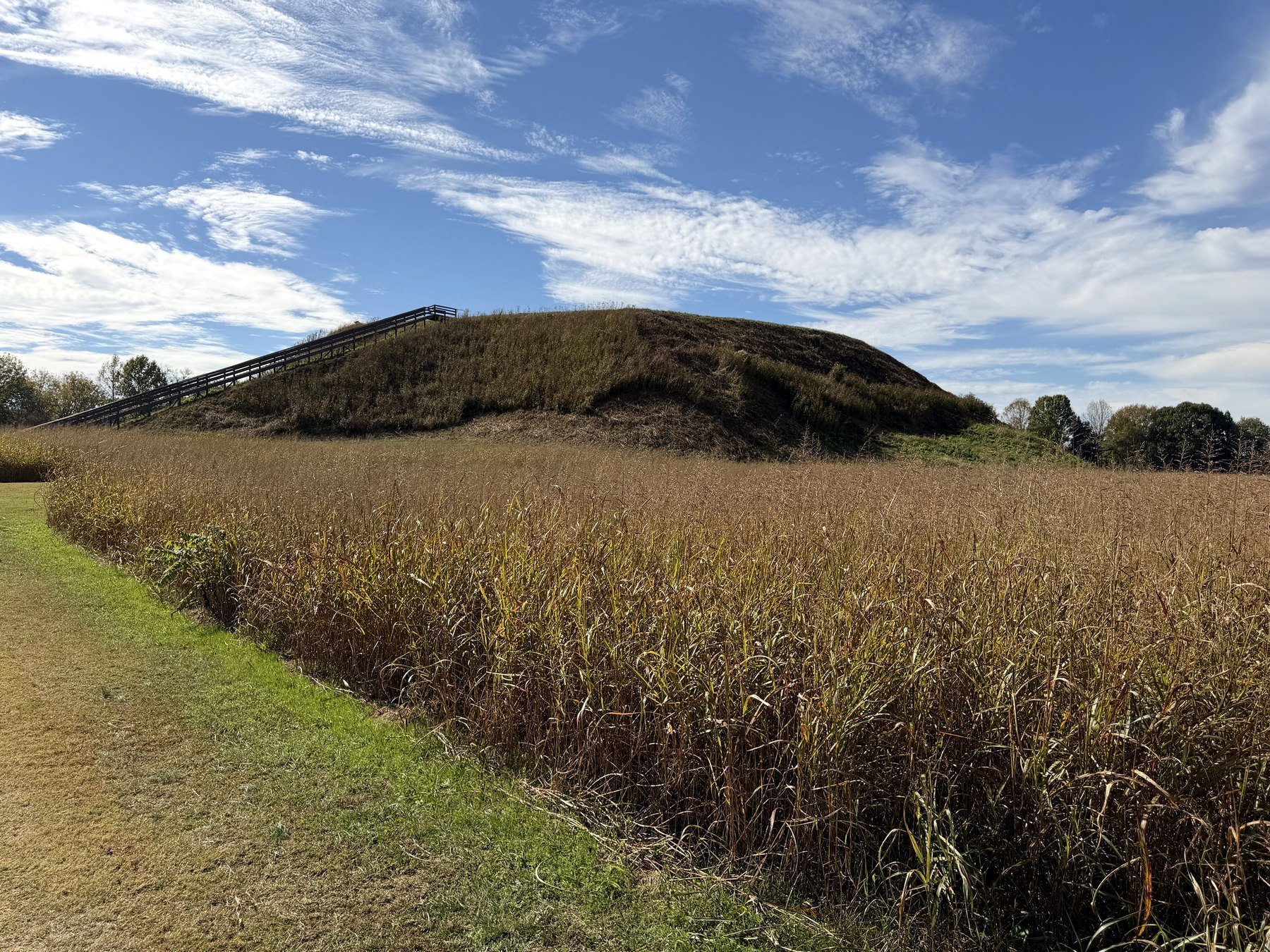
Mound A rises 63 feet above the gold fall grass
At a Glance
Address: 813 Indian Mounds Road SE, Cartersville, GA 30120
Hours: Open 7 days, 9 am to 5 pm. The mounds area closes at 4:30 pm.
Closed: Thanksgiving, Christmas and New Year's Day
Admission (plus tax): $6 adults (18 to 61), $4.50 seniors (62+), $4 youth (6 to 17), $2 kids under 6
Parking: Included with admission. This is a historic site, so it's per person admission, not the $10 state park ParkPass.
Time needed: 1.5 to 3 hours
Dogs: Leashed pets are allowed on the trails and grounds, but not inside buildings
Facilities: Museum, gift shop, restrooms, 20 picnic tables, riverside benches, Wi-Fi in the museum
Phone: 770-387-3747
Start at the Museum
Start inside the small brick museum, where you'll pay admission. Don't rush through it. The exhibits give you the context that makes the mounds outside actually click.
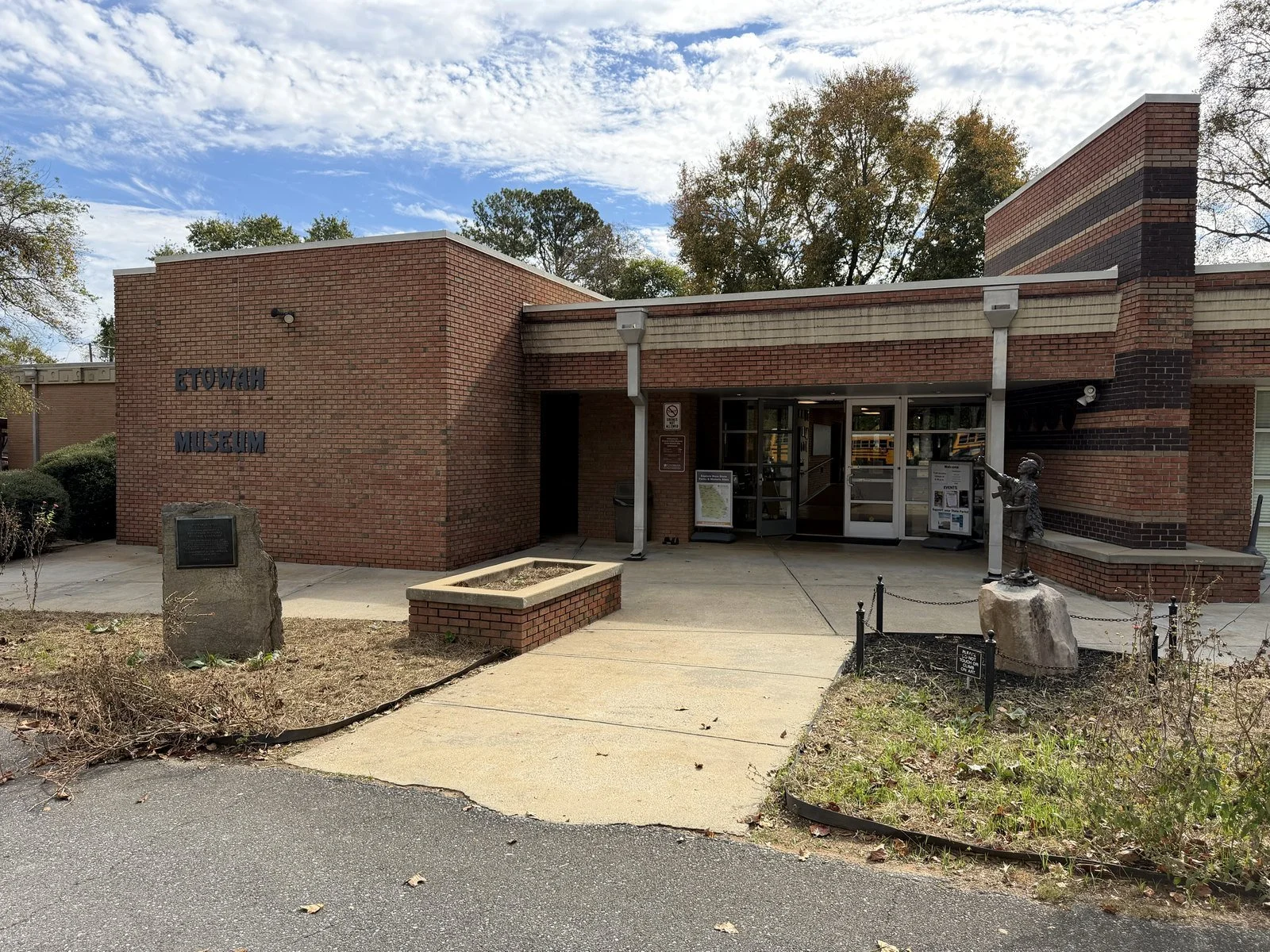
The museum, where every visit starts
The highlight for a lot of visitors is the scale model of the town, labeled "Etowah: Ancient Indian City." It shows how the site may have looked at its height: thatched homes, palisade walls, farm fields, the big plaza and the mounds with buildings on top. Look at the model, then look out the window at the real mounds, and the whole place comes into focus.
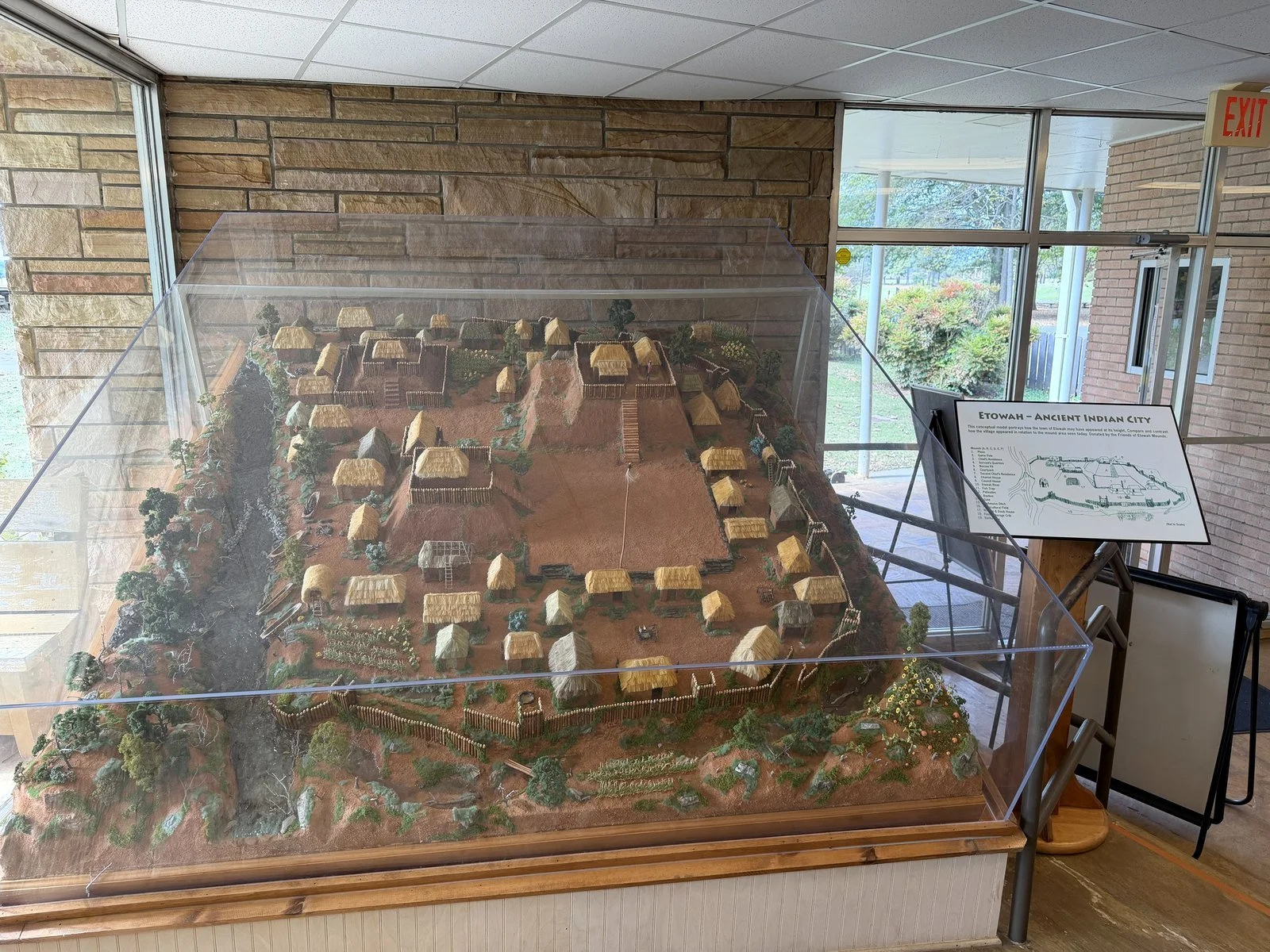
The scale model of Etowah at its height
Another gallery focuses on life along the river. There's a long dugout canoe, a woven fish trap basket hanging overhead and panels about fishing, farming and gathering. Many of the panel titles are written in the Mvskoke language alongside English, like "Hvcce | The River." The museum also shows a short film.
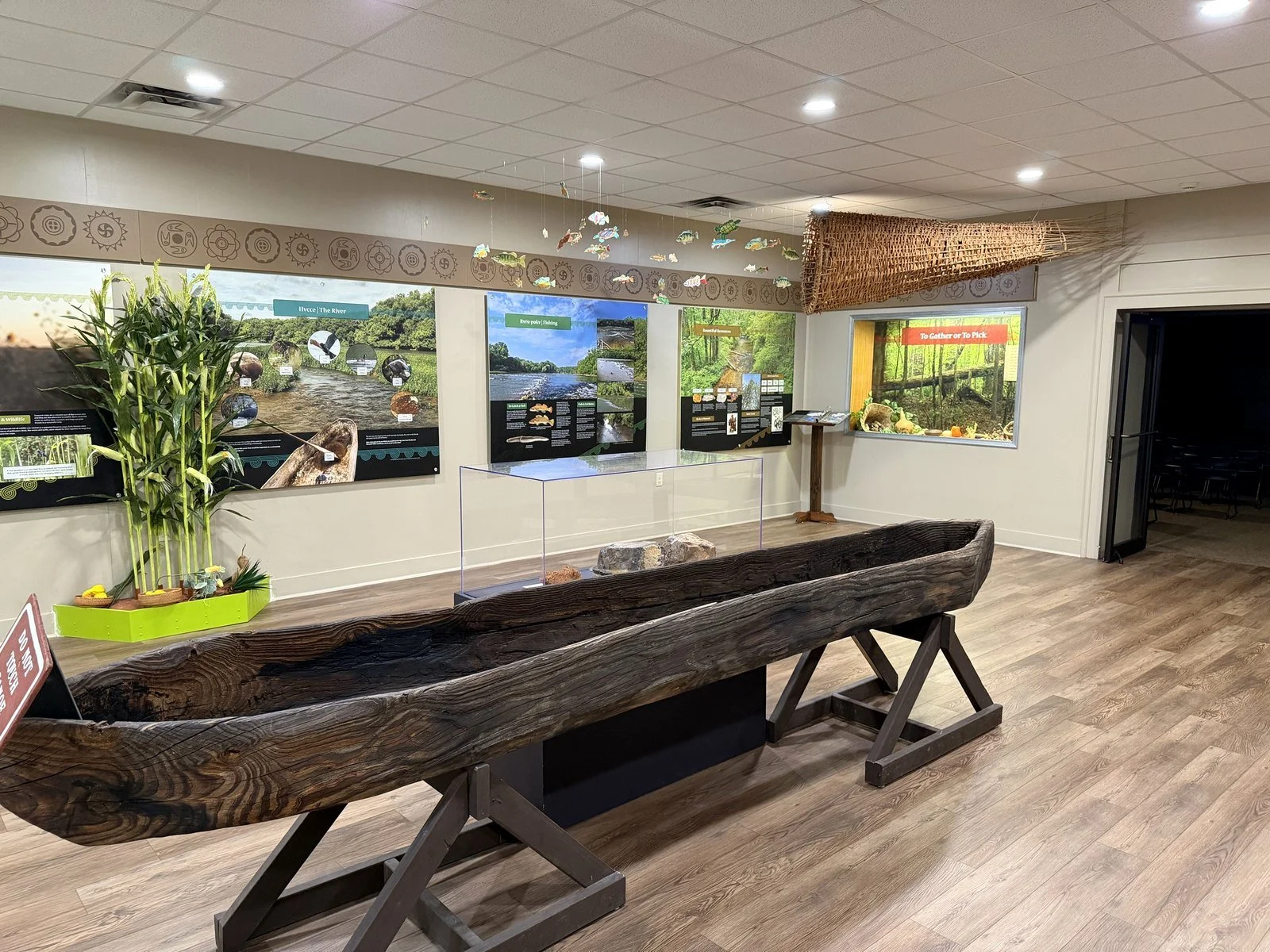
A dugout canoe and the river exhibit inside the museum
Walking the Mounds
Head out the back of the museum and the landscape opens up. There are six earthen mounds here, along with the plaza, a village area, borrow pits (where builders dug the soil for the mounds) and a defensive ditch that once wrapped around the town.
Mound A: the big one
Mound A is the tallest at 63 feet, and you can't miss it. It was likely the platform for the home of the town's priest-chief, towering over everyone below. A long wooden staircase climbs the side to the flat top, where there are benches and a sign explaining what you're looking at. I counted 131 steps to the top. It's a real workout, so take it at your own pace.
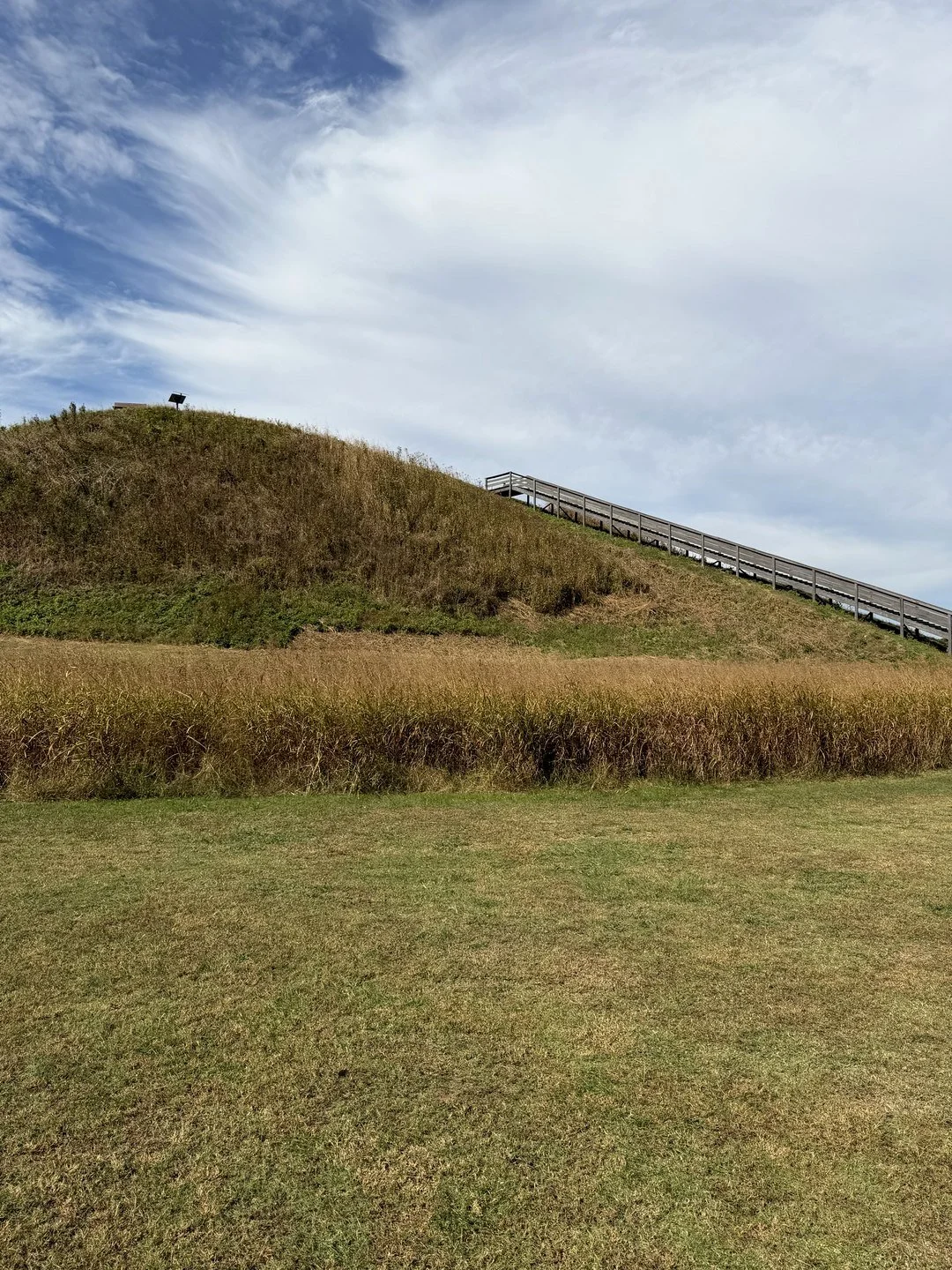
The 131 step staircase up Mound A
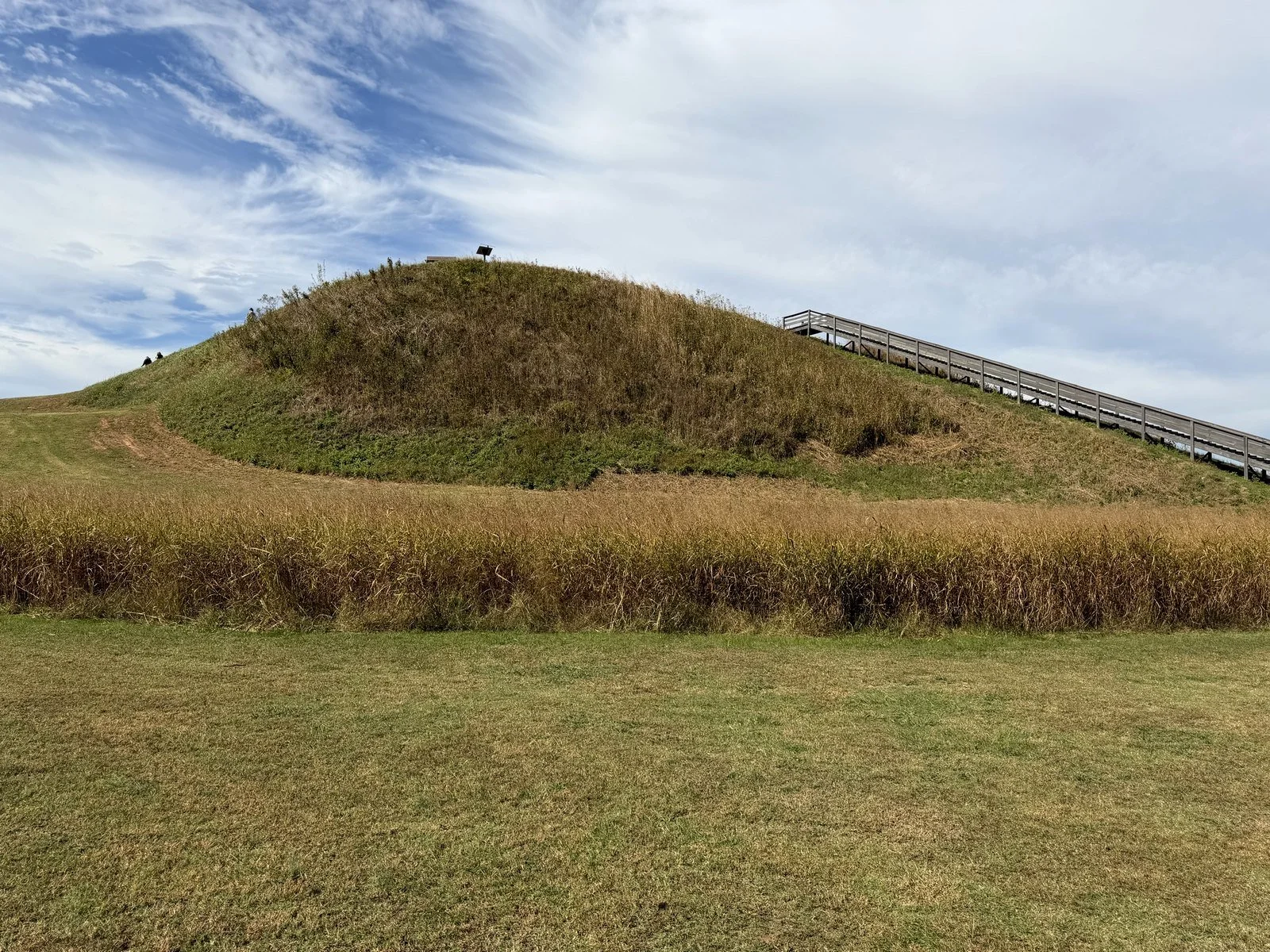
Mound A from the plaza
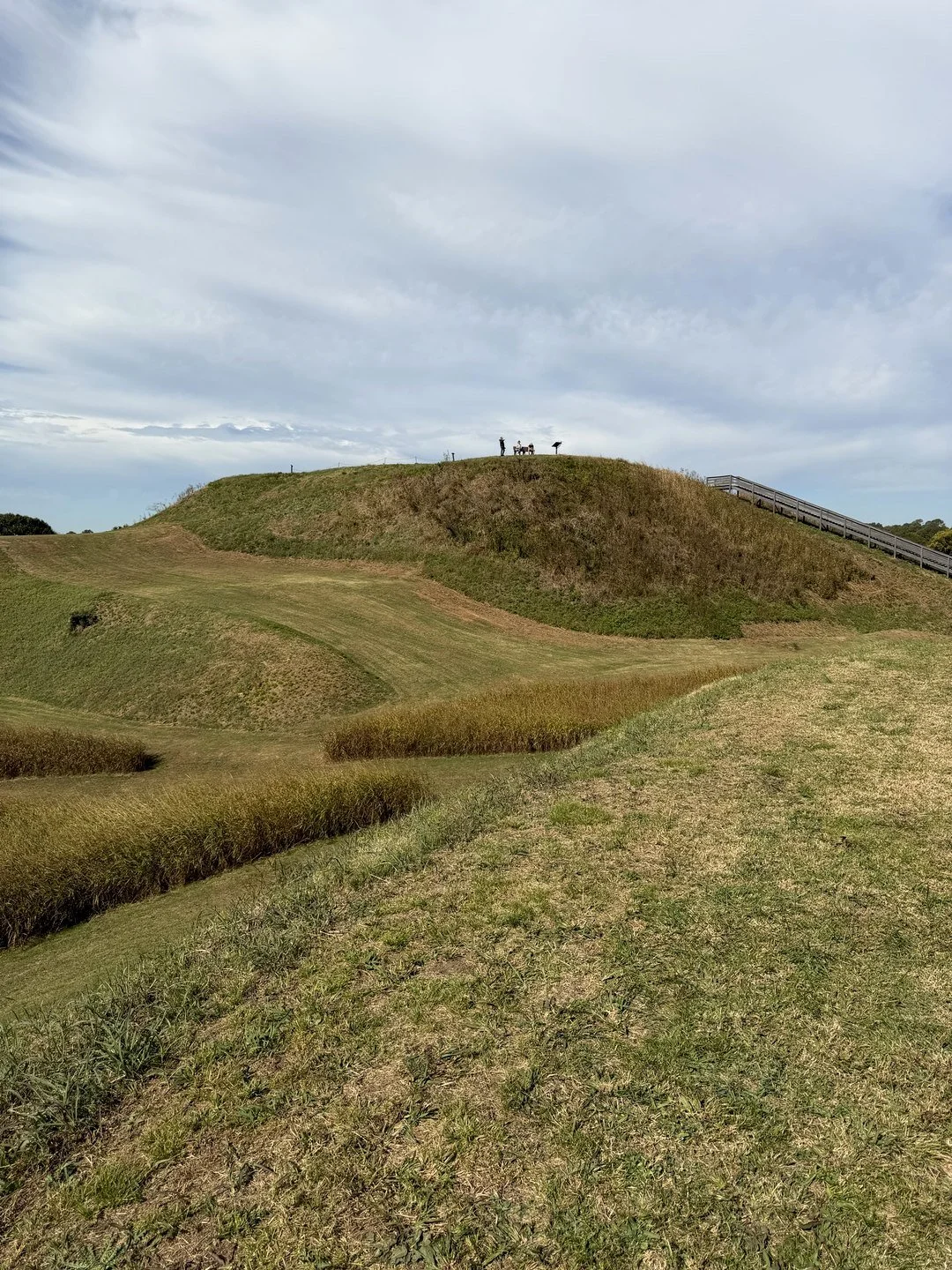
Visitors resting on top of Mound A
The view from the top is the moment of the visit. You can see the plaza below, the smaller mounds and the fields stretching toward the ridges in the distance. Take a minute up there and picture a busy town filling the space below you.
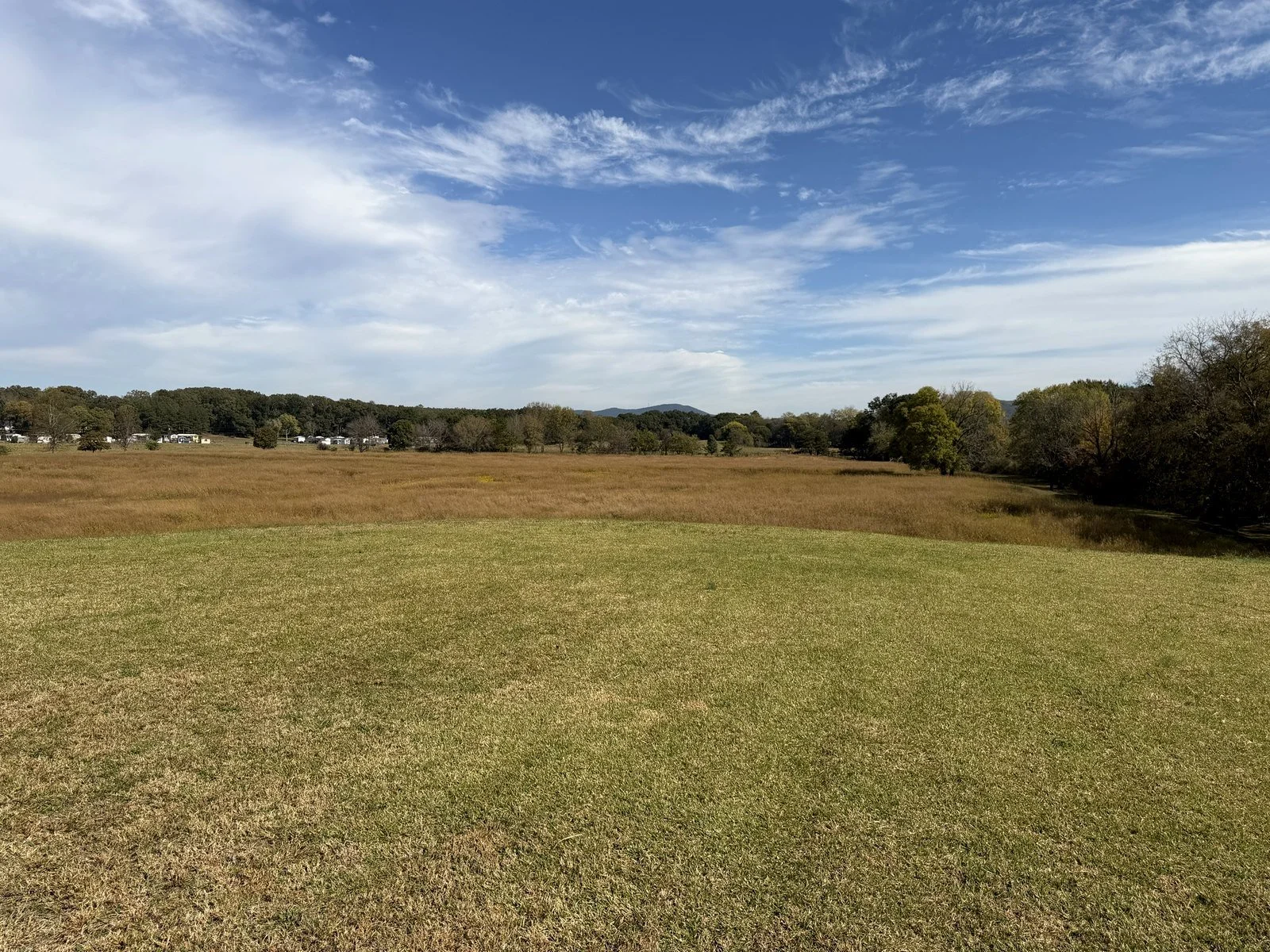
The view from the top of Mound A
The plaza and smaller mounds
From the top of Mound A you can see across the plaza to one of the smaller platform mounds, which has its own set of stairs. I climbed that one too. It's a much shorter climb. In fall, the tall grass around the mounds turns gold, and with a blue sky it's one of the prettiest scenes in North Georgia. Another of the mounds was where nobility were buried in elaborate costumes along with items they would need in the afterlife.
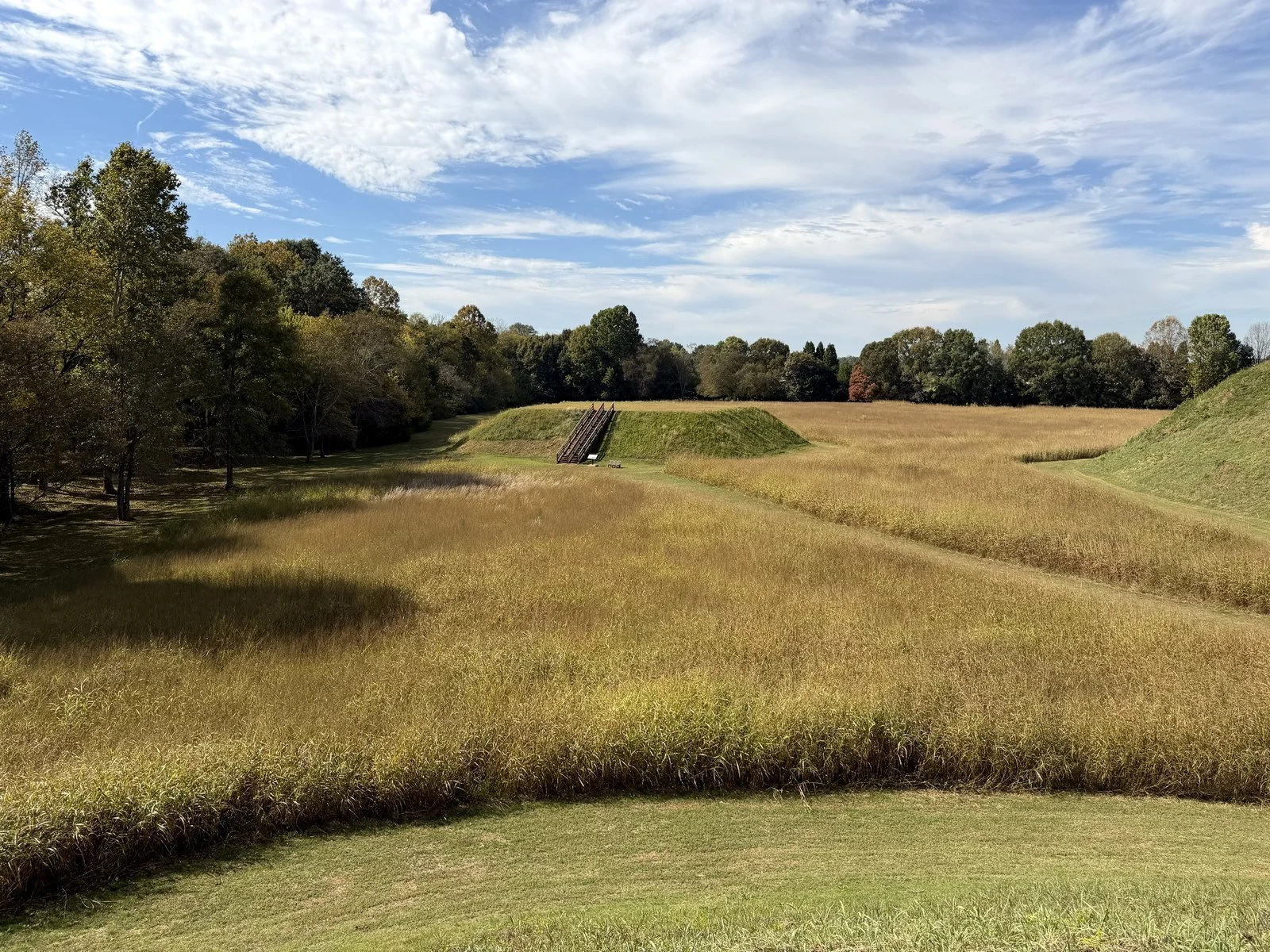
Looking across the plaza to a smaller platform mound
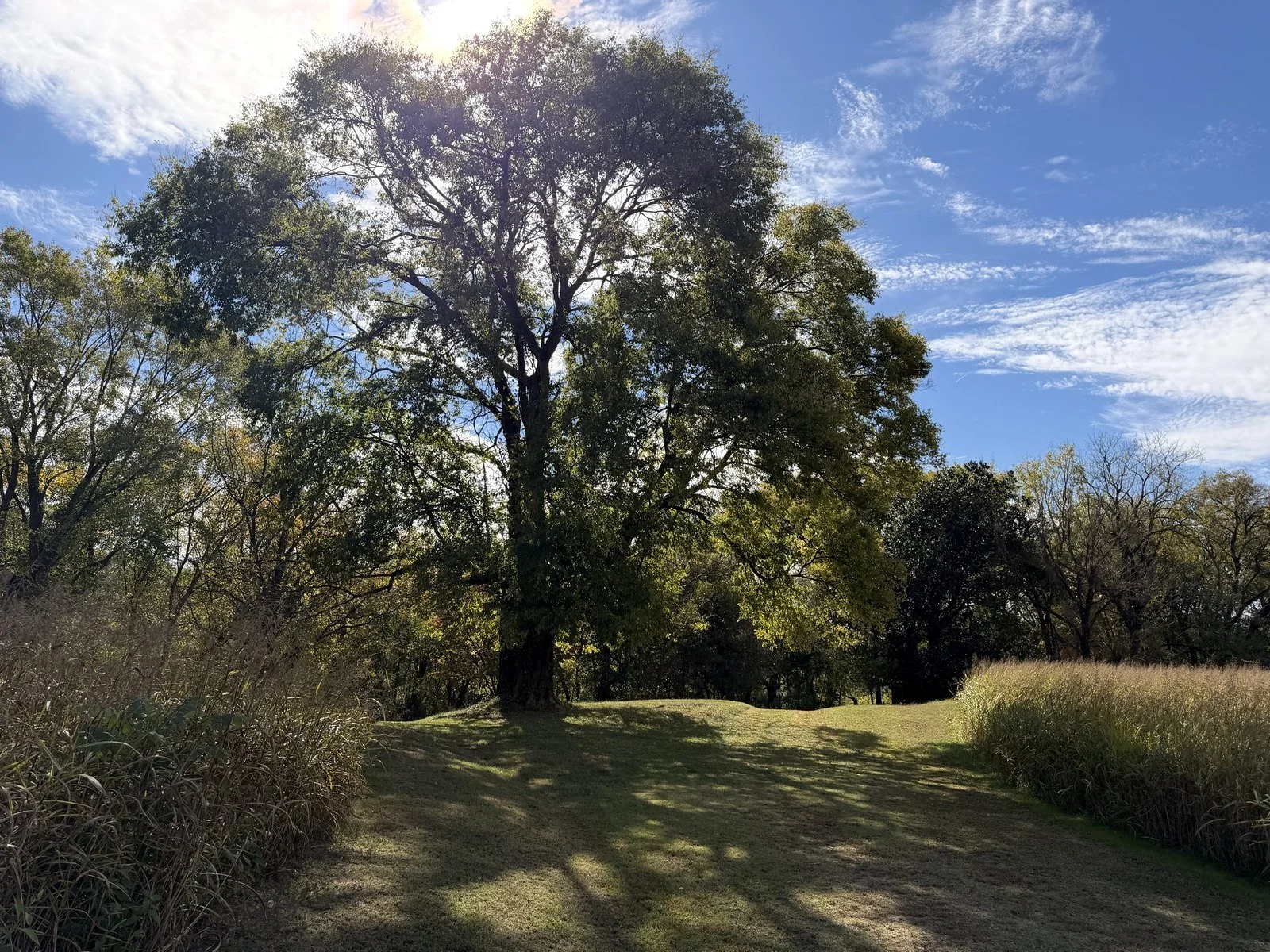
A big shade tree on the grounds
The Etowah River trail and fish trap
A nature trail follows the Etowah River along the edge of the site. Along it you can see a v-shaped stone fish trap that was used to steer fish into baskets, plus signs about how early people used native trees for food and medicine.
Don't skip the riverbank. When I visited around midday on a Wednesday in late October, the big trees along the water were turning gold and the Etowah was calm below them. After the open sun of the mounds, it's a shady spot to cool down and take in the river that made this whole town possible.
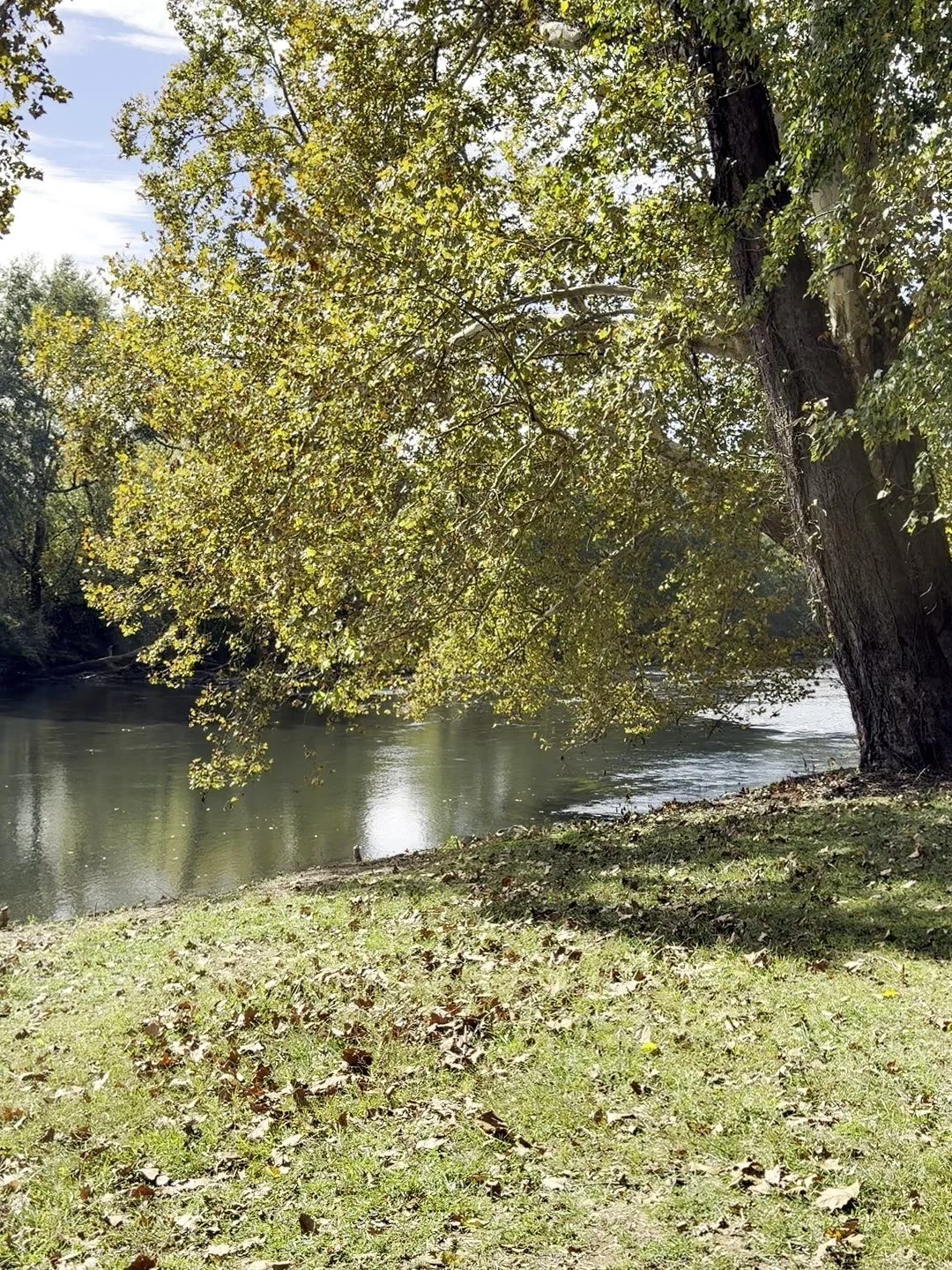
The Etowah River in late October
Near the grounds there's also a small pollinator friendly garden.
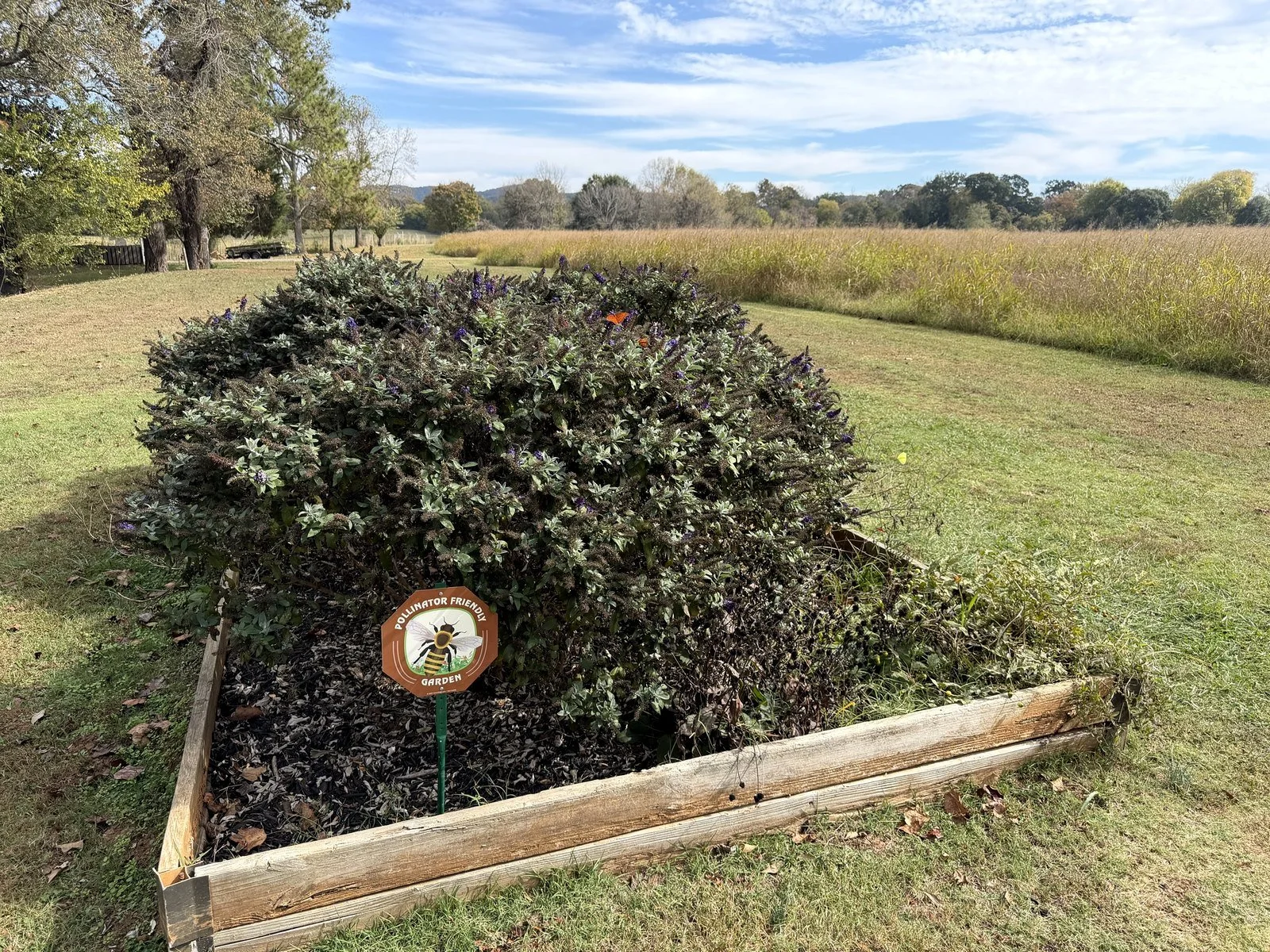
The pollinator garden near the mounds
A Little History
Etowah was built and lived in during three main phases between about 1000 and 1550 A.D. by people of the Mississippian culture. At its peak it was a political and religious center that controlled trade along the Etowah River. People here were skilled artists and craftsmen. Artifacts from the site show they decorated themselves with shell beads, paint, feathers, elaborate hairstyles and copper ear ornaments.
The site is a National Historic Landmark and is managed today by the Georgia Department of Natural Resources as a state historic site.
When to Visit
Fall is the best time to go. The grass around the mounds turns gold, the air is cooler for the stairs and the sky is often clear.
Spring is a close second, with green fields and mild weather.
Summer gets hot. There's little shade on the mound area, so go right at 9 am.
Weekday mornings are the quietest. You may share the site with school field trips on weekdays during the school year.
Mistakes to Avoid: What to Know Before You Visit
Arriving late in the day. The site closes at 5 pm, but the mounds area closes at 4:30. If you show up at 4, you won't have enough time.
Bringing your state park ParkPass and expecting it to cover entry. Historic sites charge per person admission instead. (Georgia offers a separate Historic Site annual pass if you visit a lot of them.)
Skipping the museum. The town model and exhibits make the mounds much more meaningful.
Underestimating the stairs. Mound A is 131 steps to the top, and they're steep. Take your time, and use the benches at the top to rest.
Forgetting sun protection. The grounds are wide open. Bring water, a hat and sunscreen.
Leaving the path. These mounds are sacred, irreplaceable places. Stay on mowed paths and stairs, and only climb where stairs are provided.
How to Get There
Etowah Indian Mounds is on the southwest side of Cartersville, about 45 miles northwest of downtown Atlanta. From I-75, take Exit 288 and drive about 5 miles southwest, following the brown historic site signs. From downtown Cartersville, it's roughly three miles southwest on Etowah Drive. The road ends at the site.
GPS: 34.127816, -84.806550
FAQ
How much does it cost to visit Etowah Indian Mounds?
Admission is $6 for adults, $4.50 for seniors 62 and up, $4 for youth ages 6 to 17 and $2 for kids under 6, plus tax. Parking is included.
Can you climb the mounds at Etowah?
Yes. Mound A, the tallest at 63 feet, has a wooden staircase of 131 steps to the top, and one of the smaller mounds also has stairs. Please stay on the stairs and paths and don't climb the slopes.
How long do you need at Etowah Indian Mounds?
Plan about 1.5 to 3 hours to see the museum, climb Mound A, walk the plaza and take the river trail.
Are dogs allowed at Etowah Indian Mounds?
Yes, leashed pets are allowed on the trails and grounds. They aren't allowed inside the museum or other buildings.
Does the Georgia State Parks ParkPass work at Etowah?
No. Etowah is a state historic site with per person admission, not the $10 vehicle ParkPass used at state parks.
Is Etowah Indian Mounds a state park?
Not exactly. People often call it Etowah Indian Mounds State Park, but it's a state historic site run by Georgia State Parks and Historic Sites. That's why it charges per person admission instead of the $10 ParkPass.
How far is Etowah Indian Mounds from Atlanta?
The site is on the southwest side of Cartersville, about 45 miles northwest of downtown Atlanta. Plan on roughly an hour each way, depending on traffic on I-75.
What time does Etowah Indian Mounds close?
The site is open 9 am to 5 pm every day, but the mounds area closes at 4:30 pm. It's closed Thanksgiving, Christmas and New Year's Day.
Make It a Full Day in Cartersville
Etowah pairs perfectly with the Savoy Automobile Museum on the north side of town. Do the mounds in the morning while it's cooler, grab lunch downtown, then spend the afternoon inside with rare cars and rotating exhibits. Read my full guide: Savoy Automobile Museum: A Complete Visitor Guide.
Love state parks and historic sites? Start with my Georgia State Parks guide.
Use Find a Trip to plan your next Georgia day trip.
Browse more North Georgia guides and Metro Atlanta guides.
Want more fall color? See my best fall foliage hikes in North Georgia.
Want company on your next adventure? Join the Explore Georgia Hiking Club. We host free group hikes across the state, and every pace is welcome.